
Resource Center
July 24, 2026
What Are Plastic Additives? Their Importance in Plastic Manufacturing | Tüver Pigment
The plastics industry has become one of the most important sectors in modern manufacturing, serving industries such as automotive, packaging, construction, electrical & electronics, household appliances, and consumer products. However, producing high-quality plastic products requires more than selecting the right polymer. Plastic additives play a critical role in improving processing performance, product durability, UV resistance, thermal stability, mechanical strength, and overall product lifetime.
Today, manufacturers use plastic additives not only to optimize production efficiency but also to improve the performance and appearance of finished products. Whether in extrusion, injection molding, blow molding, or masterbatch production, selecting the right additive system directly affects production quality and long-term product performance.
At Tüver Pigment, we supply high-quality plastic additives, pigments, and specialty color solutions for a wide range of industrial applications. Explore our product range on our English website.
What Are Plastic Additives?
Plastic additives are functional materials added to polymer formulations to improve processing characteristics, mechanical properties, durability, appearance, and overall product performance.
Without additives, many plastic products would not meet today's demanding industrial requirements.
Plastic additives can improve:
- UV resistance
- Heat stability
- Oxidation resistance
- Surface quality
- Processing efficiency
- Mechanical strength
- Slip performance
- Long-term durability
For this reason, plastic additives have become an essential part of nearly every plastic manufacturing process.
Why Are Plastic Additives Used?
Different plastic products require different performance characteristics depending on their application. Plastic additives help manufacturers achieve these specific requirements while improving production efficiency.
- UV Protection
Protects plastic products from sunlight degradation and color fading. - Heat Stabilization
Improves resistance to high processing temperatures. - Oxidation Protection
Extends product lifetime by reducing thermal degradation. - Slip Performance
Reduces surface friction, especially in film applications. - Anti-Block Performance
Prevents plastic films from sticking together. - Optical Brightening
Enhances brightness and improves product appearance. - Processing Improvement
Provides smoother extrusion and injection molding processes.
Most Common Plastic Additives
| Additive Type | Primary Function | Typical Applications |
|---|---|---|
| UV Stabilizers | UV protection | Outdoor plastic products |
| Antioxidants | Thermal aging protection | Masterbatch production |
| Slip Additives | Reduce surface friction | Plastic films |
| Anti-Block Additives | Prevent film blocking | Flexible packaging |
| Optical Brighteners | Increase brightness | PVC and packaging |
| Zinc Stearate | Improves mold release | Plastic & rubber processing |
The Relationship Between Pigments and Plastic Additives
Many manufacturers focus solely on pigment selection while overlooking the importance of additive compatibility. In reality, pigments and additives work together to achieve optimum processing performance and long-term color stability.
For example, even the highest-quality pigment may fade over time if UV stabilizers are not included in outdoor applications. Likewise, insufficient antioxidant protection can result in thermal discoloration during high-temperature processing.
Selecting compatible pigment and additive systems is therefore essential for achieving consistent product quality.
Key Factors When Selecting Plastic Additives
Selecting the right plastic additive is one of the most important decisions in plastic manufacturing. The wrong additive can negatively affect production efficiency, product appearance, mechanical properties, and long-term durability. Therefore, additive selection should always be based on technical requirements rather than price alone.
1. Polymer Compatibility
Different polymers require different additive systems. Polypropylene (PP), Polyethylene (PE), ABS, Polystyrene (PS), PVC, PET, and Polyamide (PA) each have unique processing conditions and performance requirements. Choosing additives compatible with the polymer ensures optimal processing and product quality.
2. Processing Temperature
Extrusion, injection molding, and blow molding involve high processing temperatures. Plastic additives must maintain their stability under these conditions without degrading or negatively affecting pigment performance.
3. End-Use Requirements
The intended application determines which additives should be used. Outdoor products require UV stabilizers, while food packaging applications demand additives that comply with food-contact regulations. Automotive and electrical components often require enhanced thermal and mechanical stability.
4. Pigment Compatibility
Pigments and additives should work together as a complete formulation. Proper compatibility improves color consistency, heat stability, UV resistance, and dispersion quality during processing.
Industries Using Plastic Additives
Plastic additives are widely used across numerous industries where durability, appearance, and processing performance are critical.
- Packaging Industry
Flexible packaging films, rigid packaging, bottles, containers, and food packaging rely heavily on slip agents, antiblock additives, antioxidants, and optical brighteners. - Automotive Industry
Interior trim, exterior components, bumpers, dashboards, and technical plastic parts require UV stabilizers, heat stabilizers, and performance-enhancing additives. - Electrical & Electronics
Plastic compounds used in electrical applications often require flame retardants, antistatic additives, and thermal stabilizers. - Construction Industry
PVC profiles, pipes, insulation products, cables, and exterior construction materials depend on additives that provide long-term weather resistance. - Agricultural Applications
Greenhouse films, irrigation systems, and agricultural plastics require UV protection and long service life under outdoor conditions. - Household Appliances
Plastic components used in white goods require excellent dimensional stability, attractive appearance, and long-term durability.
The Importance of Plastic Additives in Masterbatch Production
Masterbatch production requires much more than simply mixing pigments with carrier resins. Performance additives play an essential role in ensuring excellent pigment dispersion, improved processing characteristics, and consistent product quality.
Proper additive selection provides several advantages:
- Improved pigment dispersion
- Higher extrusion efficiency
- Reduced filter blockage
- Better color consistency
- Improved process stability
- Lower production waste
- Enhanced product quality
To learn more about pigment selection in masterbatch production, read our article:
Masterbatch Production and Pigment Selection Guide
Common Mistakes When Using Plastic Additives
- Selecting incompatible additives for the polymer.
- Using insufficient additive concentrations.
- Ignoring pigment-additive compatibility.
- Overlooking processing temperatures.
- Using low-quality raw materials.
- Failing to test new formulations before production.
- Prioritizing cost over long-term performance.
These mistakes can lead to poor color consistency, reduced mechanical strength, processing difficulties, surface defects, and customer complaints.
Tüver Pigment Plastic Additive Solutions
Tüver Pigment supplies high-quality plastic additives, pigments, and specialty color solutions for manufacturers operating in plastics, coatings, masterbatch, rubber, and industrial production.
Our product portfolio includes:
- Plastic Additives
- Organic Pigments
- Inorganic Pigments
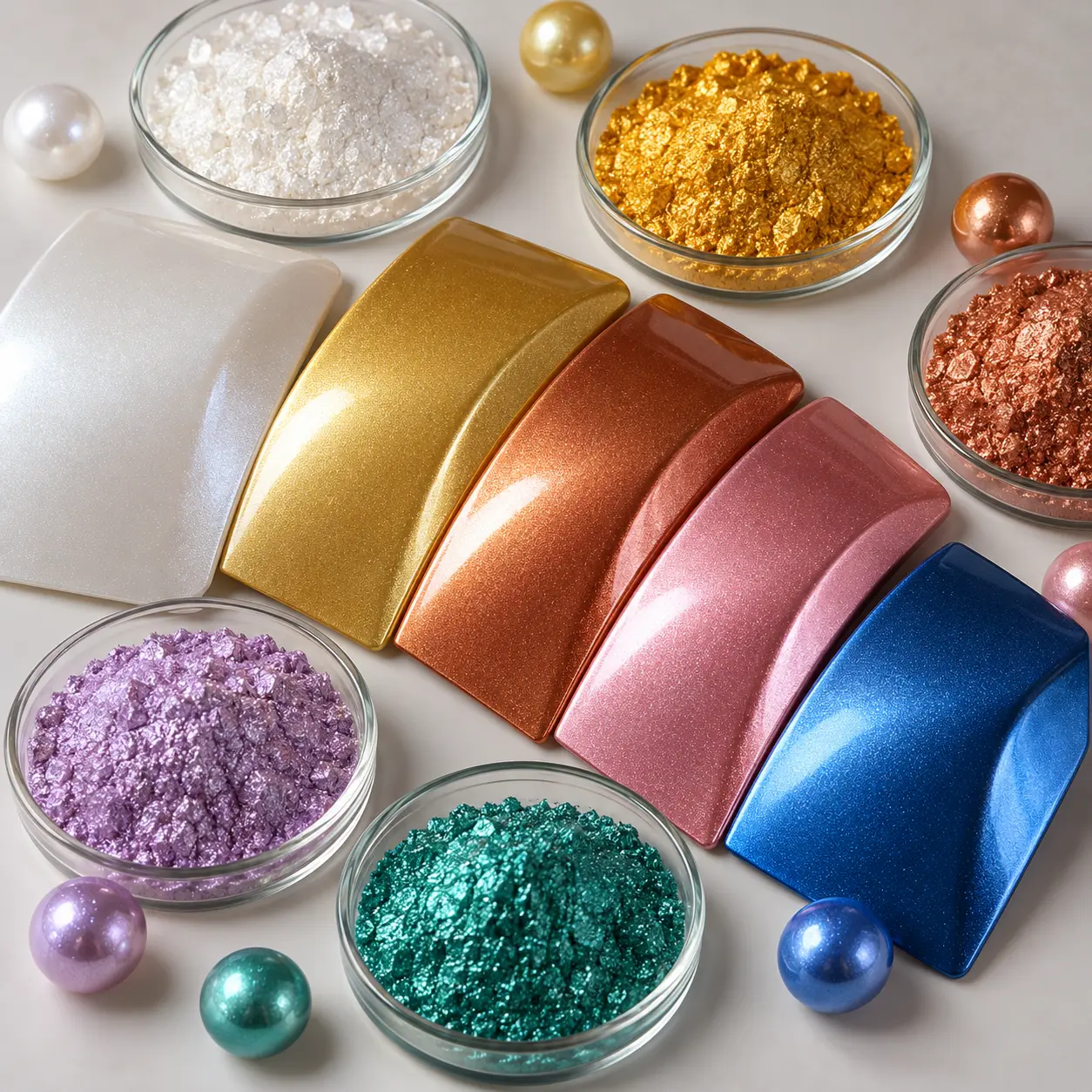
- Pearlescent Pigments
- Fluorescent Pigments
- Phosphorescent Pigments
- Solvent Dyes
- Reflective Powder
- Glitter Powders
- Metallic Powders
Our technical team helps customers select the most suitable additive and pigment combination for their specific production process.
Frequently Asked Questions (FAQ)
Why are plastic additives used?
Plastic additives improve processing efficiency, mechanical strength, UV resistance, thermal stability, surface quality, and the overall service life of plastic products. They enable manufacturers to produce higher-quality products while optimizing production performance.
Can the same additive be used for every polymer?
No. Each polymer has different processing conditions and performance requirements. Polypropylene (PP), Polyethylene (PE), ABS, PVC, PET, PS, and PA require different additive systems depending on the application and manufacturing process.
Do plastic additives affect color performance?
Yes. Properly selected additives improve pigment dispersion, enhance color consistency, and reduce color shifts caused by high processing temperatures or long-term UV exposure.
Are plastic additives important in masterbatch production?
Absolutely. Additives play a significant role in pigment dispersion, extrusion efficiency, process stability, and overall masterbatch quality. Choosing the correct additive package directly impacts production performance.
How do I choose the right plastic additive?
The correct additive should be selected according to the polymer type, processing temperature, end-use application, required performance characteristics, and compatibility with the pigment system.
Which industries use plastic additives?
Plastic additives are widely used in packaging, automotive, construction, electrical & electronics, agriculture, household appliances, medical products, consumer goods, and many other industrial applications.
Conclusion
Plastic additives are essential components in modern plastic manufacturing. They improve processing performance, enhance product durability, increase UV and heat resistance, and help manufacturers achieve consistent product quality.
When combined with the right pigment system, plastic additives contribute to better color stability, improved mechanical performance, and greater production efficiency. Selecting the correct additive package is therefore a key factor in achieving reliable, high-quality plastic products.
Tüver Pigment supplies high-quality plastic additives, organic pigments, inorganic pigments, pearlescent pigments, fluorescent pigments, phosphorescent pigments, solvent dyes, and specialty effect materials for manufacturers across multiple industries. Our technical team is ready to help you identify the most suitable solution for your production process.
Related Products
Related Products
- Organic Pigments
- Inorganic Pigments
- Pearl (Effect) Pigments
- Fluorescent Pigments
- Phosphor Pigments
- Plastic Additives
- Solvent Dyes
Tüver Pigment is a trusted supplier of industrial pigments, plastic additives, and specialty color solutions. We support manufacturers with high-quality products, technical expertise, and reliable supply solutions for plastics, masterbatch, coatings, rubber, and industrial applications. Contact our team to discuss your project or explore our product portfolio.