
Resource Center
September 21, 2026
What Are Fluorescent Pigments? Types, Properties and Applications
Fluorescent pigments are special pigments that can produce bright, vivid and highly noticeable colors. They are widely used in paints, plastics, textiles, printing, coatings, decorative products and various industrial applications where strong visual impact and high color intensity are required.
When selecting the right fluorescent pigment, color should not be the only consideration. Processing temperature, light fastness, dispersion, binder compatibility and the intended application should also be evaluated.
What Are Fluorescent Pigments?
Fluorescent pigments are pigment systems that can absorb certain wavelengths of light and re-emit part of that energy at different wavelengths. This optical behavior allows fluorescent pigments to appear brighter and more vivid than many conventional pigments.
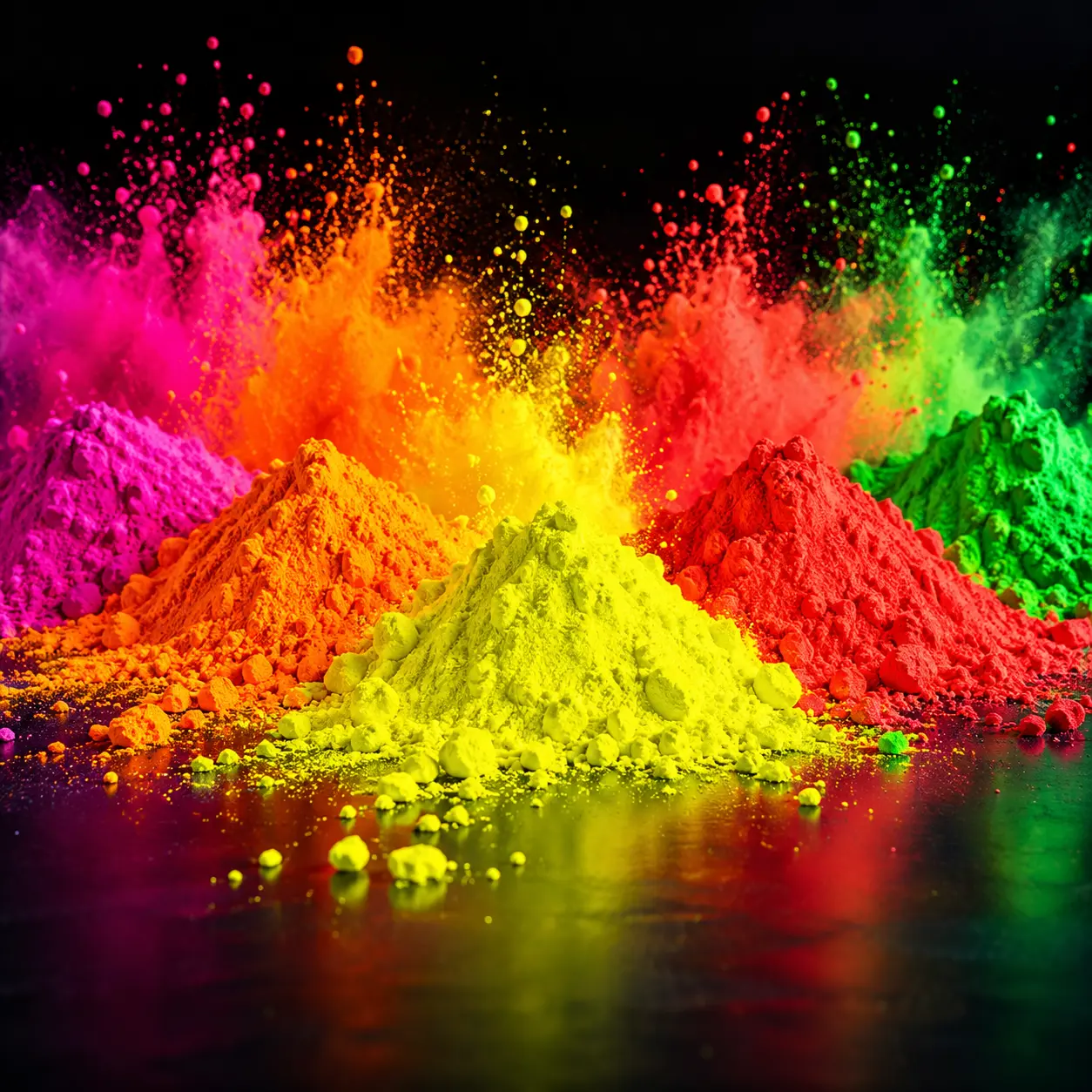
They are commonly available in bright shades such as yellow, pink, orange, red, green and magenta.
How Do Fluorescent Pigments Work?
The characteristic feature of fluorescent pigments is their ability to absorb light energy and re-emit part of it as visible light.
As a result, surfaces containing fluorescent pigments can appear significantly brighter under suitable lighting conditions. Their visual effect can become particularly noticeable under UV or high-intensity light.
Types of Fluorescent Pigments
Fluorescent pigments can be classified into different series according to their technical properties, colors and intended applications. You can explore the fluorescent pigments product range offered by Tüver Pigment.
Fluorescent HT Series
The Fluorescent HT Series can be considered for applications where higher processing temperatures are involved.
For plastic applications, pigment selection should take processing temperature and pigment heat resistance into account. You can also read our guide about pigment heat resistance for more information.
Fluorescent LG Series
The Fluorescent LG Series provides bright and vivid color options for applications requiring a strong visual effect.
Fluorescent pink, red and orange shades can be evaluated for different industrial and decorative applications depending on the required performance.
Fluorescent S Series
The Fluorescent S Series includes bright color options for different industrial coloring applications.
When selecting a product, the required color, application system and processing conditions should be evaluated together.
What Colors Are Fluorescent Pigments Available In?
Fluorescent pigments are available in a wide range of bright colors, including:
- Fluorescent yellow
- Fluorescent pink
- Fluorescent orange
- Fluorescent red
- Fluorescent green
- Fluorescent magenta
The appropriate color should be selected according to the desired visual effect, pigment concentration, substrate and application system.
Where Are Fluorescent Pigments Used?
Paints and Coatings
Fluorescent pigments can be used in paints and coating systems where vivid and highly visible colors are required. Decorative paints, special-effect coatings and industrial applications are common examples.
Plastics and Masterbatch
Fluorescent pigments can be used to color plastic products and in selected masterbatch applications. Processing temperature, polymer type, pigment concentration and dispersion should be considered when selecting a fluorescent pigment for plastics.
For other pigment solutions used in plastics, you can also explore Tüver Pigment's organic pigments and inorganic pigments.
Textiles
Fluorescent pigments can be evaluated for textile printing and coloring applications where vivid and highly visible colors are required.
Compatibility with the printing system and binder is an important factor when selecting the appropriate product.
Printing and Screen Printing
Fluorescent pigments can create strong visual effects in screen printing and other printing applications. They are particularly useful when bright and attention-grabbing colors are required.
Advertising and Decorative Applications
The high visibility of fluorescent colors makes them suitable for advertising, promotional products, decorative surfaces and special-effect applications.
Fluorescent Pigments vs. Conventional Pigments
Conventional pigments generally create color by selectively absorbing and reflecting specific wavelengths of visible light. Fluorescent pigments can additionally re-emit part of the absorbed light energy.
This different optical behavior can produce brighter and more intense visual effects, making fluorescent pigments particularly useful for applications where high visibility is required.
How to Choose the Right Fluorescent Pigment?
The following technical factors should be considered when selecting a fluorescent pigment:
- Color shade
- Color strength and brightness
- Heat resistance
- Light fastness
- Dispersion characteristics
- Binder compatibility
- Pigment concentration
- Application method
- Final product requirements
For plastics and masterbatch, processing temperature is particularly important. For paints and coatings, light fastness, dispersion and binder compatibility may have greater importance.
Why Is Dispersion Important for Fluorescent Pigments?
Proper dispersion ensures that the pigment is distributed consistently throughout the formulation. This is important for achieving uniform color, surface appearance and pigment performance.
Poor dispersion may result in uneven color, surface defects and lower-than-expected color strength.
For more information about pigment dispersion, see our guide on pigment dispersion.
Fluorescent Pink Pigments
Fluorescent pink pigments are used where bright and highly noticeable pink shades are required. They can be evaluated for decorative paints, plastics, textiles, printing and various special-color applications.
The desired color shade should be considered together with the technical requirements of the application when selecting a fluorescent pink pigment.
Heat Resistance of Fluorescent Pigments
Heat resistance is particularly important when fluorescent pigments are used in plastics and masterbatch applications.
The pigment should be suitable for the processing temperature of the polymer system. Before selecting a product, the recommended processing conditions and technical specifications should be reviewed.
Tüver Pigment Fluorescent Pigment Solutions
Tüver Pigment supplies fluorescent pigment solutions for a variety of industrial applications.
Our product range includes fluorescent pigment options for different colors and application requirements.
You can explore the fluorescent pigment product range and contact Tüver Pigment for technical information and product selection support.
Frequently Asked Questions
What are fluorescent pigments?
Fluorescent pigments are special pigments that absorb part of the incoming light energy and re-emit it, producing brighter and more vivid visual effects.
What colors are fluorescent pigments available in?
Fluorescent pigments are available in bright shades such as yellow, pink, orange, red, green and magenta.
Can fluorescent pigments be used in plastics?
Yes. Suitable fluorescent pigments can be used in plastic and masterbatch applications. Processing temperature and pigment heat resistance should be evaluated before selection.
Are fluorescent pigments used in paints?
Yes. Fluorescent pigments can be used in paints, coatings and decorative systems where bright and highly visible colors are required.
What should be considered when selecting a fluorescent pigment?
Color, heat resistance, light fastness, dispersion, binder compatibility and the intended application should be evaluated together.
Conclusion
Fluorescent pigments are an important group of specialty pigments used in paints, plastics, masterbatch, textiles, printing and decorative applications because of their vivid colors and strong visual effects.
When selecting the appropriate product, factors such as color, processing temperature, light fastness, dispersion and binder compatibility should be considered together.
For information about fluorescent pigments and technical assistance with product selection, contact Tüver Pigment.
```