
Resource Center
October 19, 2026
Pigment Migration in Plastics: Causes, Testing and Prevention
Color consistency is an important quality requirement in plastic manufacturing. A colored component must not only meet the desired shade during production but also maintain its appearance under the conditions it encounters throughout its service life. In certain applications, unwanted color transfer, surface staining or changes in appearance can affect the quality of the finished product.
These issues may be associated with pigment migration, soluble colorants, formulation additives or interactions between contacting materials. Understanding the source of the problem is essential when selecting colorants for polymer processing, masterbatch production and other industrial plastic applications.
What Is Pigment Migration?
Pigment migration generally refers to the movement of colorant-related components within a material or their transfer toward a surface or into a contacting material. However, not every instance of color transfer should automatically be classified as pigment migration.
Conventional pigments are typically insoluble solid particles dispersed throughout a polymer matrix. Depending on the formulation, an observed color transfer may instead involve soluble dyes, mobile formulation components, surface deposits or other substances present in the plastic compound.
Identifying the mechanism behind the discoloration helps manufacturers select the appropriate corrective action rather than changing the pigment without understanding the underlying cause.
What Causes Color Migration in Plastic Products?
1. Colorant Chemistry and Solubility
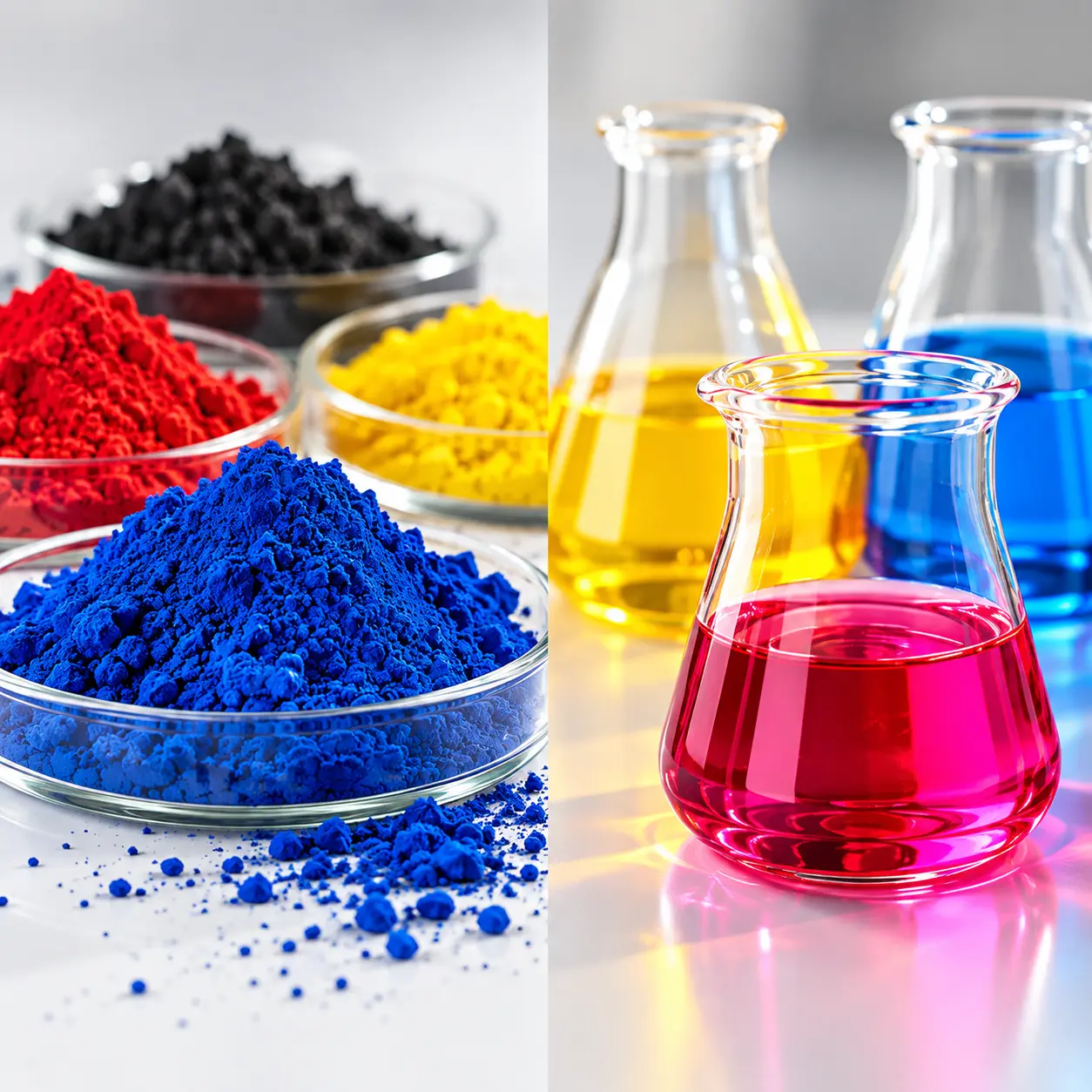
Organic pigments, inorganic pigments and solvent dyes differ in their chemical structures and physical properties. Their solubility, compatibility with the polymer and behavior under processing and service conditions can influence color stability.
It is important not to assume that all organic pigments have poor migration resistance or that all inorganic pigments automatically provide superior performance. The result depends on the specific colorant, polymer system, formulation and intended application.
Manufacturers evaluating different colorant technologies can explore organic pigments and assess their suitability against the technical requirements of the final product.
2. Polymer Compatibility
Polyethylene (PE), polypropylene (PP), polyvinyl chloride (PVC) and acrylonitrile butadiene styrene (ABS) differ in their chemical characteristics, processing conditions and formulation requirements. A colorant that performs well in one polymer may not deliver the same results in another.
Pigment selection should therefore consider the resin type, processing temperature, intended service environment and required color stability. Compatibility should be evaluated in the actual formulation rather than assumed from the pigment's general classification alone.
3. Processing Temperature and Manufacturing Conditions
Temperature, residence time, shear conditions and processing consistency can influence the behavior of colorants and other formulation components. Inappropriate processing conditions may contribute to discoloration, surface defects or changes in the appearance of a finished plastic part.
Selecting a pigment with suitable thermal stability for the intended process is therefore important. Processing conditions should also be optimized to maintain consistent dispersion and minimize unwanted changes in color.
4. Additives and Formulation Design
Plastic compounds often contain stabilizers, lubricants, processing aids and other additives. Depending on their chemistry and concentration, these ingredients may influence surface behavior, compatibility and the movement of certain components through the polymer.
If discoloration or staining occurs, the entire formulation should be reviewed. Replacing the pigment alone may not resolve an issue caused by an incompatible additive or another mobile component. Reviewing suitable plastic additives may form part of the investigation.
How Can Pigment Migration Be Reduced?
The appropriate solution depends on the mechanism responsible for the color transfer. The following measures can help manufacturers reduce the risk of unwanted discoloration and improve product consistency:
- Select a colorant suited to the polymer, processing method and end-use requirements.
- Review relevant technical data, including thermal stability, migration resistance and lightfastness where applicable.
- Evaluate pigment dispersion and compatibility within the complete formulation.
- Optimize processing temperature, residence time and other relevant manufacturing parameters.
- Test the finished formulation under representative service conditions.
- Investigate contacting materials and additives if surface staining or color transfer occurs.
Testing should be selected according to the intended application. Depending on the product, this may involve migration testing, contact testing, heat exposure or colorfastness evaluation. Applications subject to food-contact or other regulatory requirements require separate assessment against the applicable standards.
Pigment Selection for Masterbatch Production
In masterbatch manufacturing, pigment selection affects more than the final color shade. Color strength, dispersion, polymer compatibility, thermal stability and the performance of the complete formulation must all be considered.
A suitable pigment should meet the technical requirements of both the manufacturing process and the finished plastic product. Testing the actual formulation is particularly important when consistent color performance is required across different production batches.
For further guidance on colorant selection in polymer processing, read our guide to selecting the right pigment for masterbatch production.
Conclusion
Pigment migration and unwanted color transfer in plastics can involve several interacting factors, including colorant chemistry, polymer compatibility, additives and processing conditions. Correctly identifying the cause is the first step toward selecting an effective solution.
For plastic manufacturers and masterbatch producers, a systematic approach to pigment selection and formulation testing can help improve color consistency and reduce avoidable quality issues.
Tüver Pigment supplies pigment solutions for a range of industrial applications. When evaluating a suitable product, specifying the polymer type, processing temperature, target color and end-use conditions can help guide the technical selection process.