
Resource Center
July 20, 2026
Differences Between Organic and Inorganic Pigments
Pigments are among the essential raw materials that impart color to products in many industrial manufacturing processes, from plastics to paints, inks to rubber. However, the function of pigments is not merely coloring. At the same time, it supports the aesthetic appearance of the product, increases its coverage, provides resistance to outdoor conditions and contributes to the longevity of the product in many applications.
Today, pigments used in industrial production are generally divided into two main groups: organic pigments and inorganic pigments. Since both pigment groups have different chemical structures, their performance characteristics also differ significantly. Therefore, making the right pigment selection during the production process is of great importance for product quality, production efficiency, and long-term performance.
While organic pigments come to the fore when it is desired to obtain vivid and bright colors, inorganic pigments are preferred more in applications where high temperature resistance, UV resistance and outdoor performance are critical. However, it is not accurate to evaluate these two pigment groups solely in terms of "vivid color" and "high durability". In the selection of pigment, the type of polymer to be processed, the production temperature, the environment in which the product will be used, the desired color tone and technical performance expectations should be evaluated together.
In this article, we will examine in detail the basic properties of organic and inorganic pigments, their different aspects, advantages, disadvantages and in which applications they should be preferred.
What is Organic Pigment?
Organic pigments are pigments produced from carbon-based organic compounds and are distinguished by their high color strength. Thanks to its wide color spectrum, high saturation, and strong coloring performance, it is widely used in many industries.
One of the most important properties of organic pigments is their ability to produce strong color even at low usage rates. This way, manufacturers can achieve the desired color tone using less pigment. Organic pigments, especially in vibrant reds, bright yellows, intense blues, and striking green tones, yield highly successful results.
Organic pigments are particularly preferred in the following sectors:
Plastic and masterbatch production
Printing inks
Packaging industry
Decorative paint applications
Industrial coatings
Textile printing
Toy production
Consumer products
One of the reasons why organic pigments are preferred is that they offer a wide range of color options. Thanks to modern production technologies, thousands of color combinations in different shades can be achieved.
Tüver Pigment's Organic Pigments product line offers high-quality pigment solutions tailored to the needs of different sectors.
(https://tuverpigment.com/Products/organic-pigments)
What is an Inorganic Pigment?
Inorganic pigments are pigments obtained from natural minerals or metal oxides. This pigment group is particularly preferred in applications requiring high durability.
One of the most significant advantages of inorganic pigments is their ability to maintain color stability at high temperatures. Additionally, they exhibit high resistance to UV rays, weather conditions, and many chemicals. Thanks to these properties, they can retain their color for many years in outdoor applications.
Inorganic pigments are primarily used in the following sectors:
Exterior wall paints
Concrete and building materials
Ceramic production
Roof coverings
Industrial paint systems
Agricultural equipment
Road marking paints
Heavy industry applications.
Inorganic pigments provide significant advantages in applications requiring natural color tones, strong coverage, and long-lasting performance.
Tüver Pigment's Inorganic Pigments product line offers high-quality solutions for various industrial applications.
(https://tuverpigment.com/Products/Inorganic-Pigments)
Chemical Structure of Organic and Inorganic Pigments
The fundamental difference between organic and inorganic pigments stems from their chemical structures.
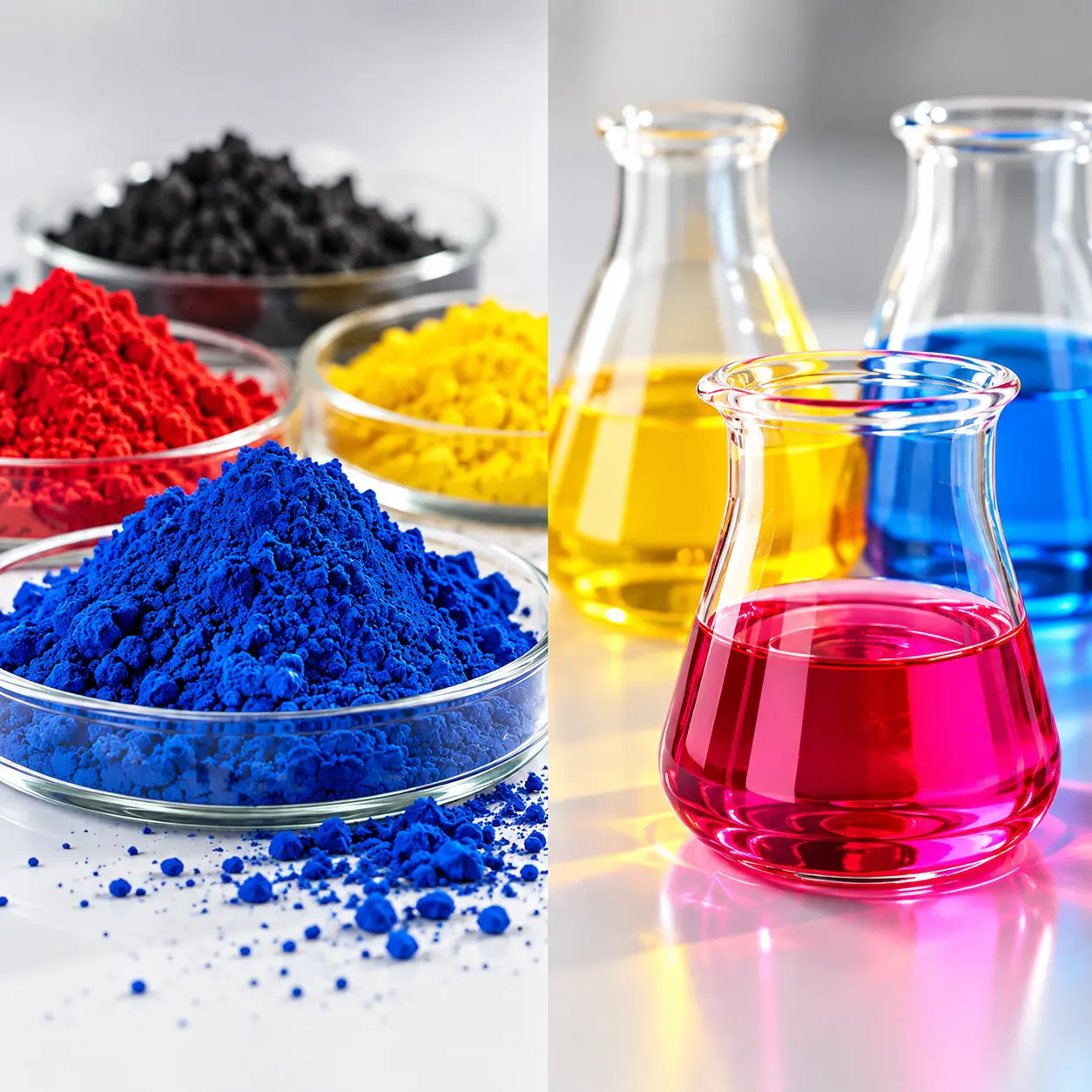
Organic pigments consist of carbon-based molecular structures, while inorganic pigments are derived from metal oxides and mineral compounds. This distinct structure directly affects the physical and chemical properties of pigments.
The difference in chemical structure is one of the most important factors determining the following performance criteria:
Color vibrancy
Heat resistance
UV resistance
Chemical resistance
Covering power
Lightfastness
Outdoor performance
Coloring power
Therefore, when selecting pigments, not only the desired color but also the environment in which the product will be used and the production conditions must be taken into account.
Color Performance
The first criterion considered in pigment selection is usually color performance. Organic pigments can produce extremely vibrant and bright colors thanks to their high chroma values. Organic pigments are frequently preferred, especially in packaging, toys, decorative paints, and consumer products, where aesthetic appearance is of great importance.
Additionally, the high coloring power of organic pigments can yield effective results with lower usage amounts. This situation may also provide an advantage in terms of production efficiency.
Inorganic pigments, on the other hand, perform well in more natural and matte tones. Oxide is widely used especially in the construction sector by providing high coverage in red, yellow, brown, black and white tones.
When evaluating color performance, not only color vibrancy but also the ability of the color to retain its appearance over many years should be taken into account. Therefore, the application's usage conditions play a decisive role in pigment selection.
Heat Resistance
One of the most important technical criteria in pigment selection is heat resistance. In the plastics industry, especially in processes such as extrusion, injection molding, and masterbatch production, the raw materials used are exposed to high temperatures. Therefore, it is of great importance that the pigment can maintain its color stability at high temperatures.
Inorganic pigments perform exceptionally well at high temperatures thanks to their mineral-based structure. Many inorganic pigments can be used without experiencing color change even when exposed to high temperatures for extended periods. Thanks to these properties, engineering plastics are safely preferred in construction materials and industrial production processes.
As for organic pigments, heat resistance may vary depending on the type of pigment used. High-performance organic pigments developed today yield successful results in many plastic applications. However, the technical characteristics of the pigments to be used at high process temperatures should definitely be evaluated and the product suitable for production conditions should be selected.
When choosing a pigment, not only the process temperature, but also the process time, the type of polymer used and the intended use of the final product should be taken into account. Choosing the right pigment not only prevents color change during production but also contributes to maintaining product quality.
UV Resistance and Light Fastness
For products exposed to outdoor conditions, sunlight is one of the most important environmental factors. Pigments exposed to ultraviolet rays for extended periods may lose their color over time. Therefore, UV resistance is of great importance, especially in outdoor applications.
Thanks to their high resistance to UV rays, inorganic pigments are widely used in exterior wall paints, concrete products, roof coverings and various building materials. These pigments can retain their color to a large extent for many years.
Organic pigments, on the other hand, have different lightfastness values depending on the pigment class. Modern organic pigments developed today can provide high UV resistance in appropriate applications. However, when selecting pigments for outdoor applications, not only color but also the expected service life must be taken into consideration.
Color stability is one of the important criteria that directly affects product quality, particularly in the automotive, construction, plastic, and packaging sectors.
Chemical Resistance
Many industrial products may come into contact with various chemicals throughout their lifespan. Acids, alkalis, solvents, oils, and cleaning chemicals are among the factors that can affect pigment performance.
Inorganic pigments generally stand out for their high chemical resistance. This is one of the important reasons why they are preferred in heavy industry applications, industrial paints, and the construction sector.
Organic pigments also exhibit successful chemical resistance in many applications. However, since performance may vary depending on the chemical structure of the pigment, the product should be selected according to the requirements of the application in which it will be used.
Accurate assessment of chemical resistance extends the product's service life while also contributing to the reduction of maintenance and replacement costs.
Coverage and Coloring Power
One of the most important properties determining the performance of pigments is their coverage power. Coverage refers to how effectively the pigment can cover the surface to which it is applied.
Inorganic pigments generally provide high coverage. In particular, white, black, red oxide, and yellow oxide pigments can quickly cover the surface and create a homogeneous appearance.
Organic pigments, on the other hand, attract attention with their high coloring power. They enable intense color to be achieved even at low usage rates. This feature provides significant advantages, particularly in the plastics, printing inks, and decorative coatings sectors.
When selecting pigments, opacity and tinting power should be evaluated together. While maximum coverage is prioritized in some applications, achieving vibrant color may be more important in others.
Advantages of Organic and Inorganic Pigments
Both pigment groups offer advantages for different needs.
Advantages of Organic Pigments
Provides vibrant and bright colors.
Has high tinting power.
Offers a wide range of colors.
It provides effective results at low usage levels.
It demonstrates successful performance in applications requiring an aesthetic appearance.
Advantages of Inorganic Pigments
Provides high temperature resistance.
Resistant to UV rays.
Long-lasting under outdoor conditions.
It has strong covering power.
It has high chemical resistance.
It offers reliable performance in construction and industrial applications.
Disadvantages of Organic and Inorganic Pigments
When selecting pigments, limitations must be considered alongside the advantages.
Some products containing organic pigments may experience performance degradation at high temperatures or in applications exposed to intense UV radiation. Therefore, selecting the appropriate product according to technical requirements is important.
Although inorganic pigments offer high durability, they may not produce colors as bright and vibrant as organic pigments. Additionally, color options may be more limited in some applications.
Therefore, the right choice must be made in line with the product's intended use and performance expectations.
Organic and inorganic pigments are two important pigment groups with distinct advantages, used to meet the needs of different sectors. In order to make the right decision in the selection of pigment, not only the expectation of color, but also the area of use, production conditions, durability requirements and the service life of the product should be evaluated together.
The performance of pigments used in plastic, paint, coating, masterbatch, textile, rubber and industrial applications depends on technical characteristics such as high temperature resistance, UV resistance, chemical resistance, color stability and application compatibility. Selecting the right pigment increases quality in production processes while contributing to the long-term performance of the final product.
As Tüver Pigment, we offer organic pigments, inorganic pigments, effect pigments and special pigment solutions for various industrial applications, especially in the plastic, paint and coating sectors. With our wide product portfolio, stock strength and technical experience, we support the development of color and performance solutions suitable for the needs of our customers.
You can contact us to get technical support on choosing the right pigment for your production, to review our product options or to determine the appropriate solution for your application.
Tüver Pigment – Color solutions that add value to your production.